

Serving Metro Atlanta

2085 McGee Road, Snellville, GA 30078

Financial options & insurance

Gastric sleeve surgery

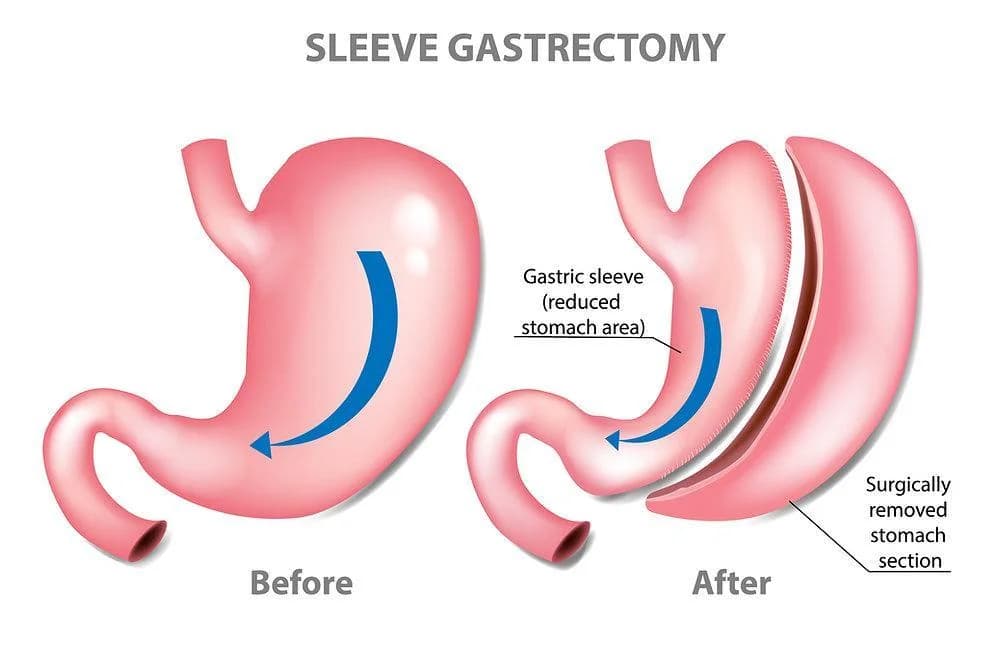
Gastric sleeve, also called sleeve gastrectomy, removes part of the stomach and leaves a smaller, narrow stomach. It is a permanent operation that requires preparation and ongoing care.

Sleeve gastrectomy diagram: part of the stomach is removed, leaving a narrow sleeve without rerouting the intestine
Gastric sleeve anatomy · Educational illustration from the practice’s sleeve information.

What changes during a sleeve gastrectomy

The surgeon removes much of the stomach and closes the remaining portion with staples. The smaller stomach holds less food. Unlike gastric bypass, a sleeve does not reroute the small intestine.

Because stomach tissue is removed, the operation cannot be reversed.

Learn about the operation

EDUCATIONAL VIDEO

Sleeve Gastrectomy

By Columbia University Department of Surgery

YouTube loads only when you choose to watch. This is an external educational resource; your care team will explain your own operation and risks.

Compare the operation with your other options

Your consultation includes discussion of health history, expectations and alternatives. Bring previous treatment experiences and ask how they affect the decision.

Ask specifically about reflux, eating after surgery and the need for ongoing nutrition care. A BMI calculation alone cannot decide which treatment is appropriate.

Questions to ask before choosing gastric sleeve

These questions can help you prepare for a consultation. Your surgeon and care team will use your health history and current clinical guidance to set your individual plan.

How do I know whether gastric sleeve may be appropriate for me?

A consultation is needed to review your health history, weight-related health concerns, previous treatment experiences, expectations and alternatives. Your surgeon will discuss whether sleeve surgery fits your situation. A BMI calculation alone cannot decide which treatment is appropriate.

What preparation is usually discussed before sleeve surgery?

Preparation may include bariatric education, recommended assessments and a pre-operative appointment. Ask which medicines, eating instructions and other preparations apply to you, who arranges each assessment, and when your care team will review the results.

What should I plan for during recovery?

Ask for a written plan covering the progression of food and fluids, supplements, activity and work restrictions, and follow-up. Your care team should tailor these instructions to your operation and recovery. Ask whom to contact if eating or drinking is difficult or if you have concerns.

What risks should I discuss before surgery?

Your discussion should include risks such as bleeding, infection, leaks, blood clots, nutrient deficiencies and reflux. Ask which risks are relevant to your health and how the team would monitor and manage them.

What follow-up should I expect after surgery?

Ask for the current follow-up schedule in writing and who will review nutrition, supplements, symptoms and progress. Ask how to contact the team between visits and whether nutrition visits or support services are available.

What to expect

Your care team will personalize preparation, treatment and follow-up. These stages are a guide, not an appointment schedule.
StageWhat to discuss with your care team
ConsultationReview your health history, options, expectations and risks. Discuss the program and bariatric education.
Medical weight lossDiscuss weight checks, nutrition appointments, medicines and counseling as appropriate for your plan.
Pre-opComplete the assessments your team recommends, which may include cardiac or pulmonary screening, and review your preparation instructions.
Surgical procedureConfirm the operation with your surgeon. The practice’s educational outline distinguishes gastric sleeve and gastric bypass; your consultation determines your individual plan.
AftercareFollow your written eating and supplement instructions. Arrange post-operative visits, nutrition follow-up and support with your team on an individualized schedule.

Discuss risks before planning surgery

Bleeding, infection, leaks and blood clots are among the risks of bariatric surgery. Nutrient deficiencies and reflux also belong in the sleeve discussion. Ask which risks matter for your health and how they would be managed.

Request your own preparation instructions, including any assessments and medicine changes. Use the preparation and aftercare guide to frame your questions; confirm your individual plan with the care team.

Plan for eating and follow-up

Recovery includes changes in food texture, portions and nutritional intake. The care team should provide your eating plan, supplement advice and follow-up instructions.

When can I return to work or lifting?

Ask the surgeon for guidance based on your operation, recovery and the activities your work involves.

What should I ask about long-term care?

Ask who will review nutrition, supplements, symptoms and progress, and how to contact that team between visits.

Eastside Bariatrics & General Surgery uses cookies for analytics and advertising, to improve this site and measure our ads. See our cookie policy.